
- 5 October 2026
- Posted by: Ellice Whyte
- Categories: Leadership, Mental health, Workplace
Every year on 10 October, World Mental Health Day creates an opportunity to talk more openly about mental health and consider what still needs to change.
This year’s theme, “Lived Experiences Heard: Real Voices, Real Change”, feels particularly important.
Because while professional expertise, research and evidence all have an essential role in improving mental health, there is another form of expertise we shouldn’t overlook: the experience of actually living through it.
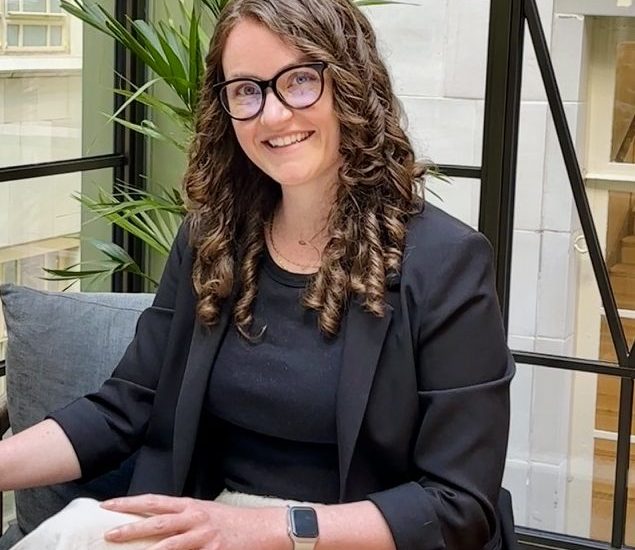
So, for World Mental Health Day, we interviewed our very own Ellice Whyte, Business Psychologist and Founder of Mindset, about some of the personal experiences behind her professional interest in workplace mental health, and how those experiences continue to influence the way she works today.
Where did your interest in mental health begin?
Probably much earlier than people might expect. I struggled with feeding and eating from a very young age, and that led to a lot of anxiety throughout my childhood and teenage years.
At the time, there wasn’t an explanation for what I was experiencing. I was seen as an extremely fussy eater.
For years, I ate a very limited range of foods. I wouldn’t eat anything other than chips in restaurants and wouldn’t eat the food served at school. It affected a huge part of my childhood, but neither I nor the people around me really understood why.
It wasn’t until I reached university and was being investigated for some health issues that I discovered I had Avoidant/Restrictive Food Intake Disorder (ARFID).
Having a name for what I had experienced was incredibly important. Suddenly, there was an explanation for something that had been part of my life for years.
I understood myself differently.
Like many people, I then experienced challenges accessing the right support, but I did eventually recover. Looking back, that experience became one of the foundations of my interest in mental health.
It’s also why this year’s World Mental Health Day theme resonates with me. There can be such a difference between observing someone’s behaviour and actually listening to and understanding their experience.
For years, what other people saw was a “fussy eater”. My experience of it was very different.
Did you always know you wanted to become a psychologist?
Not at all. I actually wanted to be a singer!
I originally went to the University of Southampton to study music. While I was there, I took a module in music therapy and had the opportunity to work with people with dementia, in hospices and in special educational needs schools.
I absolutely loved it.
It made me realise that what I really enjoyed was working with people and supporting them. And although music could be an incredibly powerful way of doing that, I wanted to understand more about people and be able to support them in other ways too.
So, I went back to university to study psychology.
Even then, I wasn’t completely sure which direction I would take. At different points, I considered forensic psychology and working within CAMHS.
It was actually my own experience of entering the workplace that eventually made the direction clear.
What happened when you entered full-time work?
Unfortunately, my first experience of full-time employment wasn’t a positive one. I experienced bullying from my manager and a member of my team, and the stress became incredibly difficult.
During that period, I became very unwell and experienced a TIA, sometimes referred to as a “mini stroke”, which was subsequently explained to me as stress-related. I was signed off work for several weeks.
It was frightening, but also eye-opening.
I had studied psychology by this point, but experiencing such an intense physical response during a period of workplace stress made me realise just how significantly our experience of work can affect us.
I was also incredibly frustrated by the culture of the organisation.
It wasn’t simply about what was happening to me. I could see the impact the environment was having on other people too.
That was when workplace psychology really started to feel like my calling.
I became fascinated by the question of what organisations can do differently to create environments where people can work well and remain well.
Does having that lived experience change how you work as a psychologist?
Absolutely. Having experienced it myself gives me a much greater sense of empathy for someone who might be living through a difficult situation every day.
One of the pieces of feedback I’m most pleased to receive from the people I work with is that they felt heard.
Of course, when I’m working with someone through an organisation, I’m there to provide professional support and have to work within the parameters of the organisation, the support available and relevant responsibilities.
But there’s still a human being sitting in front of me.
I take a lot of care over how I speak to people. I will spend additional time in assessments or meetings when someone needs it, and I don’t charge for follow-ups when I need more information or someone needs more time to explain their experience.
That’s important to me.
Sometimes people’s experiences don’t fit neatly into an appointment slot. They may have spent months or years trying to explain what’s happening to them. They might not know how to articulate it themselves yet.
Giving somebody the space to talk helps them feel heard, but it also helps me do my job better. The more I understand someone’s experience, the better placed I am to understand what might actually help.
Are workplaces getting better at listening?
I’d like to think so.
If I compare workplaces now with my experience of entering employment around 12 years ago, there are many more opportunities for employees to have a voice.
Employee surveys, mental health champions, leadership training and workplace wellbeing initiatives are much more common. Wellbeing is valued more highly by many organisations, and digital technology has also created new ways of gathering people’s experiences and giving employees opportunities to contribute.
But it varies enormously between organisations – and between different parts of the same organisation.
I work with some amazing clients who are genuinely passionate about this. They actively seek out people’s experiences and really want to understand what they could do better.
Elsewhere, there might be a fantastic individual or team doing brilliant work, but that thinking hasn’t quite spread throughout the wider organisation yet.
And, of course, there are still workplaces that could do considerably better.
So, what does genuinely listening look like?
For me, we need to listen out of interest and compassion – not simply listen so that we can respond, deflect or explain something away.
That’s an important distinction.
Organisations have more mechanisms for listening than ever before. We can run surveys, focus groups, wellbeing conversations, employee networks and engagement exercises.
But having opportunities for employees to speak isn’t necessarily the same as employees feeling heard.
If someone shares a difficult experience and our immediate response is to explain why something happened, defend an existing process or demonstrate why nothing can change, we’ve technically listened – but we may not have really tried to understand.
This is where the second half of this year’s World Mental Health Day theme is so important.
Real voices, real change.
Listening should create curiosity.
What is this person’s experience telling us? Is it an isolated issue, or might other people be experiencing something similar? Is there something about the job, management approach, workload, culture or wider working environment that we need to examine?
We won’t always be able to make every change somebody asks for. Organisations have competing needs, responsibilities and practical constraints.
But we can take people’s experiences seriously.
And sometimes the most useful thing we can do before jumping to solutions is simply make sure we’ve properly understood the problem.
What would you tell your younger self now?
That everyone deserves to feel valued at work, whatever their position.
Every individual has something valuable to bring to their workplace. We need to take care of our workforce and create the conditions in which people can work well.
I’m incredibly proud of myself for recognising that the workplace I was in wasn’t right for me and for not staying there for too long.
At the time, it was an extremely difficult experience. But ultimately, I used it for something positive.
It influenced the psychologist I became and, eventually, the business I created.
My own experiences of mental health have taught me a lot. But so have the experiences people have trusted me with since – through assessments, training, consultancy, teaching and conversations with employees and managers.
And perhaps that’s what I take most from this year’s World Mental Health Day theme.
Lived experience has value. But we have to create the conditions where people feel able to share it – and then be prepared to genuinely listen.
Because when people find a workplace where they feel valued, supported and able to work well, we give them a much better opportunity to thrive.
And surely that is what workplace mental health should ultimately be about.


